


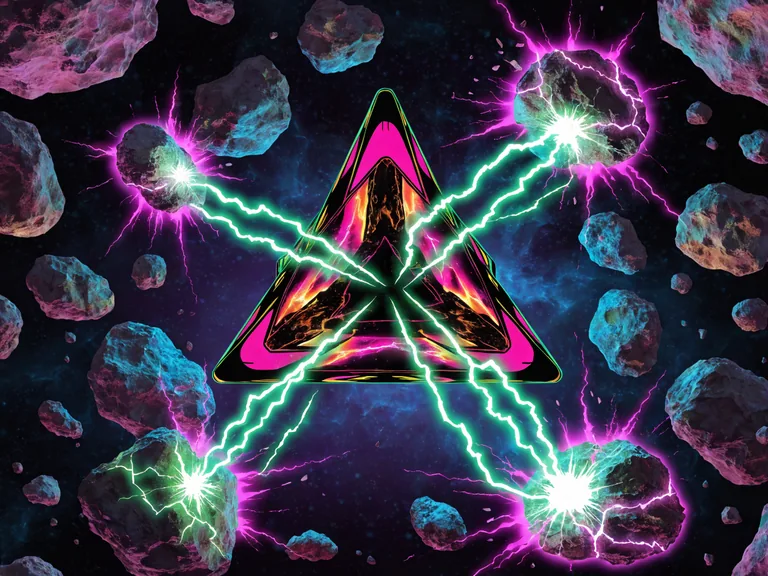

How I Built Void Balls Using AI: Claude Code, Unity MCP & the Solo Dev Workflow
A deep dive into building an indie game as a solo developer using AI tools — from Claude Code Opus for development to Replicate for art generation and ElevenLabs for audio.
The Challenge: Building a Game Alone
Building a game as a solo developer means wearing every hat — designer, programmer, artist, audio engineer, QA tester, and marketer. Traditionally, this forces brutal compromises. You pick your strongest skill and everything else suffers.
But what if AI could fill the gaps?
That’s the experiment behind Void Balls, a two-button roguelite bullet-hell built almost entirely with AI-assisted tools. Here’s exactly how the pipeline works.
The Core Stack
Claude Code Opus — The Development Backbone
Claude Code isn’t just a code assistant. It’s the orchestrator of the entire development pipeline. Here’s what it handles:
- Game architecture: Claude designed the entity-component system, the card/power-up framework, and the boss fight state machines
- C# implementation: Hundreds of scripts written and iterated through Claude Code, with real-time Unity MCP feedback
- Game balance: Card effects, enemy stats, timing windows — all tuned through conversation
- Marketing content: This blog post, social media copy, store page descriptions
- 8 specialized agents: From Lead Designer to QA Tester, Claude runs autonomous development loops
The key insight: Claude doesn’t replace creative decision-making. I describe what the game should feel like, what the player experience should be, and Claude handles the implementation details.
Unity 6 + Unity MCP — The Game Engine
Unity 6 with URP 2D handles all rendering, physics, and gameplay. But the game-changer is Unity MCP (Model Context Protocol), which connects Claude directly to the Unity Editor.
With Unity MCP, Claude can:
- Inspect scene hierarchies and component values
- Read and modify game objects in real-time
- Run play mode and observe results
- Debug issues by examining actual game state
This closes the feedback loop. Instead of describing bugs in text, Claude can see them and fix them.
Replicate — Visual Assets
Every sprite, background, and promotional image in Void Balls was generated through Replicate’s API. The workflow:
- Define a canonical color palette (7 colors, locked)
- Generate sprites using text prompts with palette constraints
- Review and iterate until the aesthetic is right
- Post-process for consistency (clean edges, transparent backgrounds)
The result is a cohesive visual style that looks intentional, not random — because the palette constraint forces consistency.
ElevenLabs — Audio & Sound Effects
Sound design is often the most overlooked part of indie games, but it’s critical for feel. ElevenLabs generates:
- Explosion and impact effects
- Ambient void atmosphere
- UI feedback sounds
- Boss fight audio cues
Each sound is generated, reviewed, and sometimes layered or modified to fit the game’s dark, otherworldly vibe.
Meshy — Future 3D Pipeline
While Void Balls is 2D, our next prototypes will be 3D. Meshy provides text-to-3D and image-to-3D generation that’s already integrated into our pipeline, ready for the next project.
CapCut — Content Creation
Trailers, devlogs, and social media clips all go through CapCut for editing and auto-captioning. AI-assisted editing makes it feasible for one person to maintain a content schedule.
The Numbers
- Development time: 2 weeks from concept to v0.1.0
- Codebase: 173 production scripts (~29,000 lines of C#), all AI-generated, all human-reviewed
- Test coverage: 88 test files (~19,000 lines) — near 100% coverage
- Sprites generated: 33 AI-generated sprites (17 card icons, 8 enemies, 3 balls, 5 world/UI)
- Audio: 9 sound effects + 3 music tracks (2 gameplay themes + 1 boss theme)
- Power-up cards: 15 with unique mechanics
- Enemy types: 5 distinct enemies + 1 boss (Mjolnir, The Hammer)
- Cost: Primarily Claude Code subscription + Replicate API credits (~$50/month)
What I Learned
AI amplifies your vision, it doesn’t replace it. The game design, the feel, the creative direction — that’s all human. What AI does is remove the bottleneck between having an idea and seeing it in the game.
Constraints make AI output better. The locked color palette, the two-button control scheme, the 10-minute run target — these constraints give AI tools clear boundaries that produce more cohesive results.
The feedback loop is everything. Unity MCP’s ability to let Claude see and interact with the actual game state eliminates the most frustrating part of AI-assisted development: context mismatch.
What’s Next
Void Balls v0.1.0 is live on itch.io. We’re looking for player feedback to decide what to build next — more bosses, more ball characters, or deeper story content.
If you want to follow the journey, find us on YouTube.
The future of solo game development is AI-augmented. Void Balls is proof it works.